Bargaining in Arabic: How to Haggle Like a Local
Master the art of bargaining in Arabic markets with essential haggling phrases, souk vocabulary, and cultural tips to get the best deals like a local.
Table of Contents
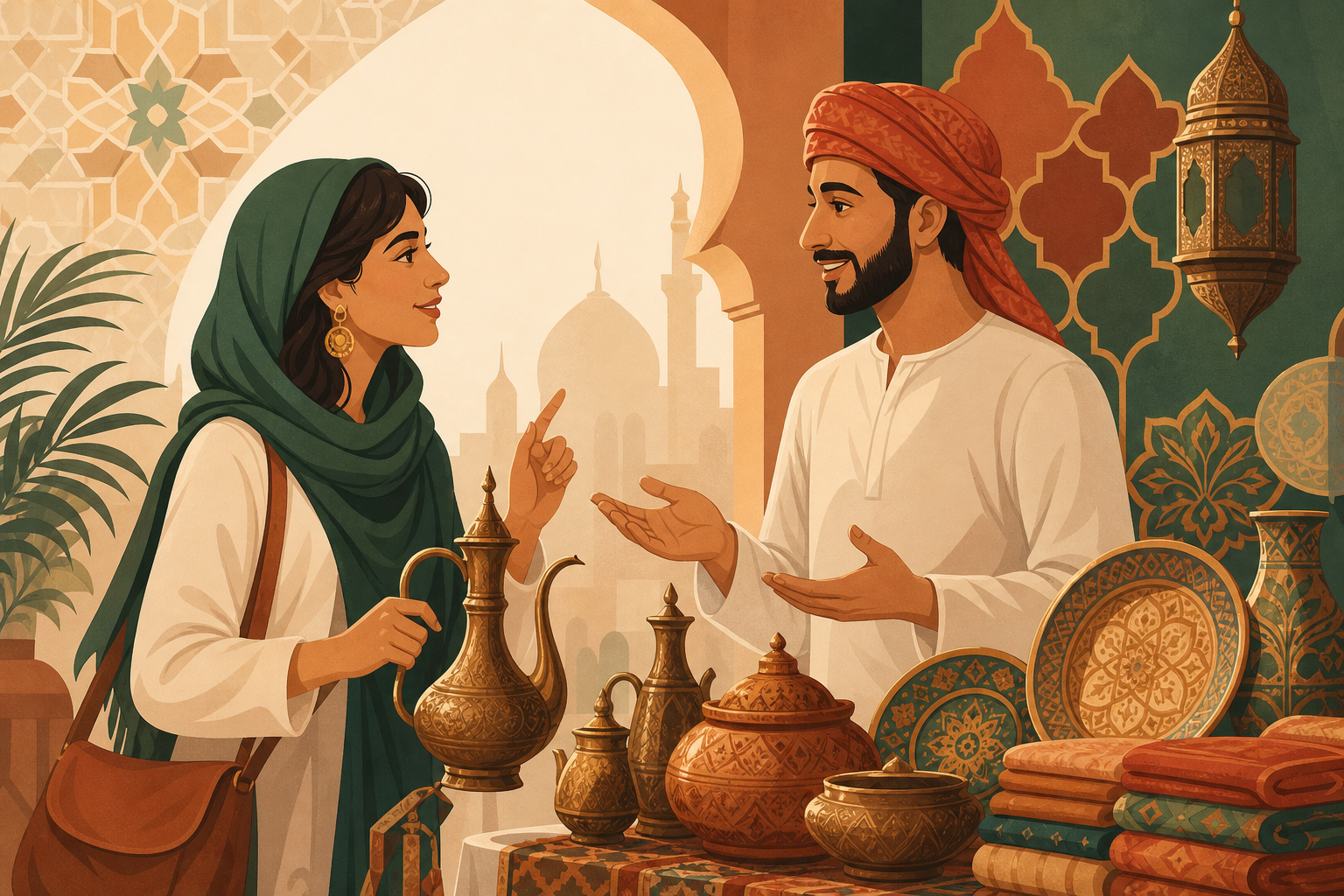
Walking through a bustling souk in Marrakech, Cairo, or Dubai is one of the most exhilarating travel experiences in the world. The air hums with the scent of spices, the shimmer of silk, and the lively back-and-forth of Arabic bargaining. But if you walk in without knowing a few key phrases, you're almost certainly leaving money on the table — and missing out on one of the most authentic cultural interactions the Arab world has to offer.
Bargaining isn't just a transaction in Arab markets; it's a social ritual. It involves patience, humor, tea, and mutual respect. Knowing even a handful of bargaining Arabic phrases transforms you from a tourist into a respected negotiator. This guide will give you everything you need to haggle confidently in Arabic.
Why Bargaining Matters in Arab Culture
In most Western countries, the price tag is final. In the Arab world — especially in traditional markets — bargaining is expected, even welcomed. A vendor who doesn't negotiate may actually feel offended if you simply pay the asking price without any attempt at haggling. It signals that you don't take the transaction seriously.
Haggling is a form of social bonding. Vendors enjoy the dance of negotiation, and a good-natured exchange often ends in new friendships, complimentary mint tea, or an extra item tossed in as a gift. Understanding this cultural context helps you approach Arabic market bargaining with the right attitude: relaxed, friendly, and patient.
Before diving into phrases, it helps to brush up on your Arabic greetings and phrases, because every successful bargaining session starts with a warm hello.
Understanding Dialects in the Souk
One important thing to know: Arabic varies significantly by region. The phrases used in a Cairo market differ from those in a Casablanca souk or a Dubai mall. As a traveler, Modern Standard Arabic (MSA) phrases will generally be understood everywhere, but locals will appreciate it even more if you pick up a few regional expressions.
For a deeper understanding of how Arabic varies across the Arab world, check out our guide to Arabic dialects explained.
For this article, we'll focus on widely understood phrases that work across the Arab world, with a few popular dialectal variations noted where relevant.
Essential Greetings to Start a Transaction
Every successful bargaining session in an Arabic souk begins with proper greetings. Skipping this step marks you as rude and in a hurry — two things that will cost you in negotiations.
| Arabic | Transliteration | Meaning |
|---|---|---|
| السلام عليكم | As-salāmu ʿalaykum | Peace be upon you |
| وعليكم السلام | Wa ʿalaykum as-salām | And upon you peace (response) |
| كيف حالك؟ | Kayfa ḥālak? | How are you? |
| الحمد لله | Al-ḥamdu lillāh | Praise be to God (I'm fine) |
| أهلاً وسهلاً | Ahlan wa sahlan | Welcome |
Take a moment to exchange pleasantries. Ask how the vendor is doing. Comment on the beauty of their goods. This small investment of time pays enormous dividends in the bargaining process.
Asking About Prices: Key Arabic Haggling Phrases
Once you've warmed up the conversation, it's time to express interest in an item. Here are the most important Arabic haggling phrases for inquiring about prices.
How Much Does This Cost?
- بكم هذا؟ — Bikam hādhā? — How much is this?
- كم ثمنه؟ — Kam thamanuh? — What is its price?
- بكم هذه البضاعة؟ — Bikam hādhihi al-biḍāʿa? — How much is this merchandise?
In Egyptian dialect, you'll commonly hear:
- بكام ده؟ — Bikām da? — How much is this?
In Levantine (Syrian/Lebanese) dialect:
- قديش هاد؟ — Adēsh hād? — How much is this?
Knowing your numbers is absolutely critical here. If you haven't already, take time to review the Arabic numbers guide and our detailed post on Arabic numbers 1-100 so you can understand prices when they're quoted to you.
Making Your Counter-Offer
This is the heart of Arabic souk vocabulary — the actual negotiation. The vendor will quote a price, often significantly higher than their acceptable minimum. Your job is to respond calmly and confidently.
Expressing That the Price Is Too High
| Arabic | Transliteration | Meaning |
|---|---|---|
| غالي جداً | Ghālī jiddan | Very expensive |
| هذا كثير | Hādhā kathīr | This is too much |
| سعرك عالي | Siʿrak ʿāli | Your price is high |
| مش معقول | Mish maʿqūl | Unreasonable (Levantine dialect) |
Offering a Lower Price
| Arabic | Transliteration | Meaning |
|---|---|---|
| سأعطيك... | Saʿṭīk... | I'll give you... |
| أعطيني بـ... | Aʿṭīnī bi... | Give it to me for... |
| هل يمكن بـ...؟ | Hal yumkin bi...? | Can it be for...? |
| آخر سعر؟ | Ākhir siʿr? | What's your final price? |
Example exchange:
Vendor: هذا بمئة درهم. (Hādhā bi-miʾat dirham.) — This is 100 dirhams.
You: غالي جداً! أعطيني بخمسين. (Ghālī jiddan! Aʿṭīnī bi-khamsīn.) — Very expensive! Give it to me for fifty.
A good rule of thumb: start your counter-offer at 40–50% of the asking price and work your way toward a middle ground.
The Art of Walking Away
One of the most powerful tools in any bargaining arsenal is the walk-away. In Arabic market culture, expressing that you're about to leave often brings the vendor's price down dramatically.
| Arabic | Transliteration | Meaning |
|---|---|---|
| شكراً، سأفكر | Shukran, saʾfakkir | Thank you, I'll think about it |
| مع السلامة | Maʿa as-salāma | Goodbye (as you turn to leave) |
| لا، شكراً | Lā, shukran | No, thank you |
| سأبحث في مكان آخر | Saʾabḥath fī makān ākhār | I'll look somewhere else |
The key is to walk away slowly and without urgency. A genuine offer will often come before you've taken five steps. If the vendor calls you back with a better price, you've won the first round.
Sealing the Deal
When you've reached a price you're both happy with, it's time to close the deal graciously. How you finish the transaction matters as much as how you started it.
| Arabic | Transliteration | Meaning |
|---|---|---|
| اتفقنا | Ittafaqnā | We've agreed / It's a deal |
| بالله؟ حقاً؟ | Wallāh? Ḥaqqan? | Really? (showing pleasant surprise) |
| ممتاز | Mumtāz | Excellent |
| شكراً جزيلاً | Shukran jazīlan | Thank you very much |
| بارك الله فيك | Bārak Allāhu fīk | May God bless you |
| إلى اللقاء | Ilā al-liqāʾ | Until we meet again |
Always express gratitude warmly, even if you didn't reach a deal. The Arab world is small, and the same vendor may remember you next time — possibly with a better price.
Useful Descriptive Vocabulary for the Souk
Beyond prices, you'll want to describe what you're looking for and comment on quality. Here's essential Arabic souk vocabulary for describing goods.
Quality and Appearance
| Arabic | Transliteration | Meaning |
|---|---|---|
| جميل | Jamīl | Beautiful |
| ممتاز | Mumtāz | Excellent |
| مصنوع يدوياً | Maṣnūʿ yadawiyyan | Handmade |
| أصلي | Aṣlī | Authentic / Original |
| جودة عالية | Jawda ʿāliya | High quality |
| هل هذا حقيقي؟ | Hal hādhā ḥaqīqī? | Is this real/genuine? |
Colors and Sizes
| Arabic | Transliteration | Meaning |
|---|---|---|
| أحمر | Aḥmar | Red |
| أزرق | Azraq | Blue |
| أخضر | Akhḍar | Green |
| كبير | Kabīr | Big |
| صغير | Ṣaghīr | Small |
| هل عندك مقاس أكبر؟ | Hal ʿindak miqyās akbar? | Do you have a bigger size? |
For a broader vocabulary foundation, explore our Arabic vocabulary categories and review the 100 most common Arabic words.
Payment and Practical Phrases
Once the deal is struck, you'll need to handle the practicalities of payment.
| Arabic | Transliteration | Meaning |
|---|---|---|
| هل تقبل بطاقة؟ | Hal taqbal biṭāqa? | Do you accept cards? |
| فقط كاش | Faqaṭ kāsh | Cash only |
| عندك فكة؟ | ʿIndak fakka? | Do you have change? (colloquial) |
| هل يمكن التغليف؟ | Hal yumkin at-taghlīf? | Can you wrap it? |
| احتاج إيصالاً | Aḥtāj īṣālan | I need a receipt |
Cultural Dos and Don'ts of Arabic Bargaining
Knowing what to say is only half the battle. Here's how to negotiate with cultural intelligence:
Do:
- ✅ Smile and maintain a relaxed, friendly demeanor
- ✅ Accept tea or coffee if offered — refusing is considered rude
- ✅ Use compliments like جميل (jamīl — beautiful) freely
- ✅ Invoke God in phrases like إن شاء الله (inshā'Allāh — God willing)
- ✅ Be patient — good deals take time
- ✅ Buy something even if small when a vendor has invested significant time
Don't:
- ❌ Show excitement about an item before negotiating (it weakens your position)
- ❌ Make an offer you're not prepared to honor
- ❌ Bargain aggressively for basic necessities like food or very inexpensive items
- ❌ Rush the process
- ❌ Disrespect the vendor's goods or livelihood
A Complete Sample Bargaining Dialogue
Here's a realistic conversation you might have at an Arabic souk:
You: السلام عليكم! (As-salāmu ʿalaykum!) Vendor: وعليكم السلام، أهلاً وسهلاً! (Wa ʿalaykum as-salām, ahlan wa sahlan!) You: كيف حالك؟ (Kayfa ḥālak?) Vendor: الحمد لله، تفضل! (Al-ḥamdu lillāh, tafaḍḍal! — Fine, please come in!) You: بكم هذه السجادة؟ (Bikam hādhihi as-sijjāda? — How much is this carpet?) Vendor: بثلاثمئة درهم. (Bi-thalāthimiʾat dirham. — 300 dirhams.) You: غالي جداً! أعطيني بمئة وخمسين. (Ghālī jiddan! Aʿṭīnī bi-miʾa wa khamsīn. — Too expensive! Give it to me for 150.) Vendor: لا لا، مستحيل. خذها بمئتين وخمسين. (Lā lā, mustaḥīl. Khudhā bi-miʾatayn wa khamsīn. — No no, impossible. Take it for 250.) You: شكراً، سأفكر... مع السلامة. (Shukran, saʾfakkir... maʿa as-salāma. — Thank you, I'll think about it... goodbye.) Vendor: تفضل! مئتان فقط! (Tafaḍḍal! Miʾatān faqaṭ! — Please! Just 200!) You: اتفقنا! شكراً جزيلاً. (Ittafaqnā! Shukran jazīlan. — Deal! Thank you very much.)
Tips for Learning More Arabic Before Your Trip
If you're preparing for a trip to an Arabic-speaking country, a little language investment goes a long way. Start with the fundamentals:
- Learn to read the script with our Complete Guide to the Arabic Alphabet
- Study the Arabic numbers so you can understand prices instantly
- Memorize basic survival phrases with our Essential Arabic Phrases for Travelers
- Build vocabulary quickly using our Arabic words directory
If you're serious about achieving conversational ability quickly, read our guide on how to learn Arabic fast.
Final Thoughts
Bargaining in Arabic is far more than a way to save money — it's a window into Arab culture, hospitality, and the joy of human connection. When you walk into a souk armed with even a dozen phrases, you'll find vendors lighting up with appreciation and warmth. The best souvenirs you'll bring home from any Arab market won't just be the carpets, spices, or jewelry — they'll be the memories of those genuine exchanges.
Practice these Arabic haggling phrases before your trip, approach every transaction with a smile, and remember: the goal isn't just a lower price. It's the shared laugh, the complimentary tea, and the story you'll tell for years. بالله عليك — go enjoy the souk!