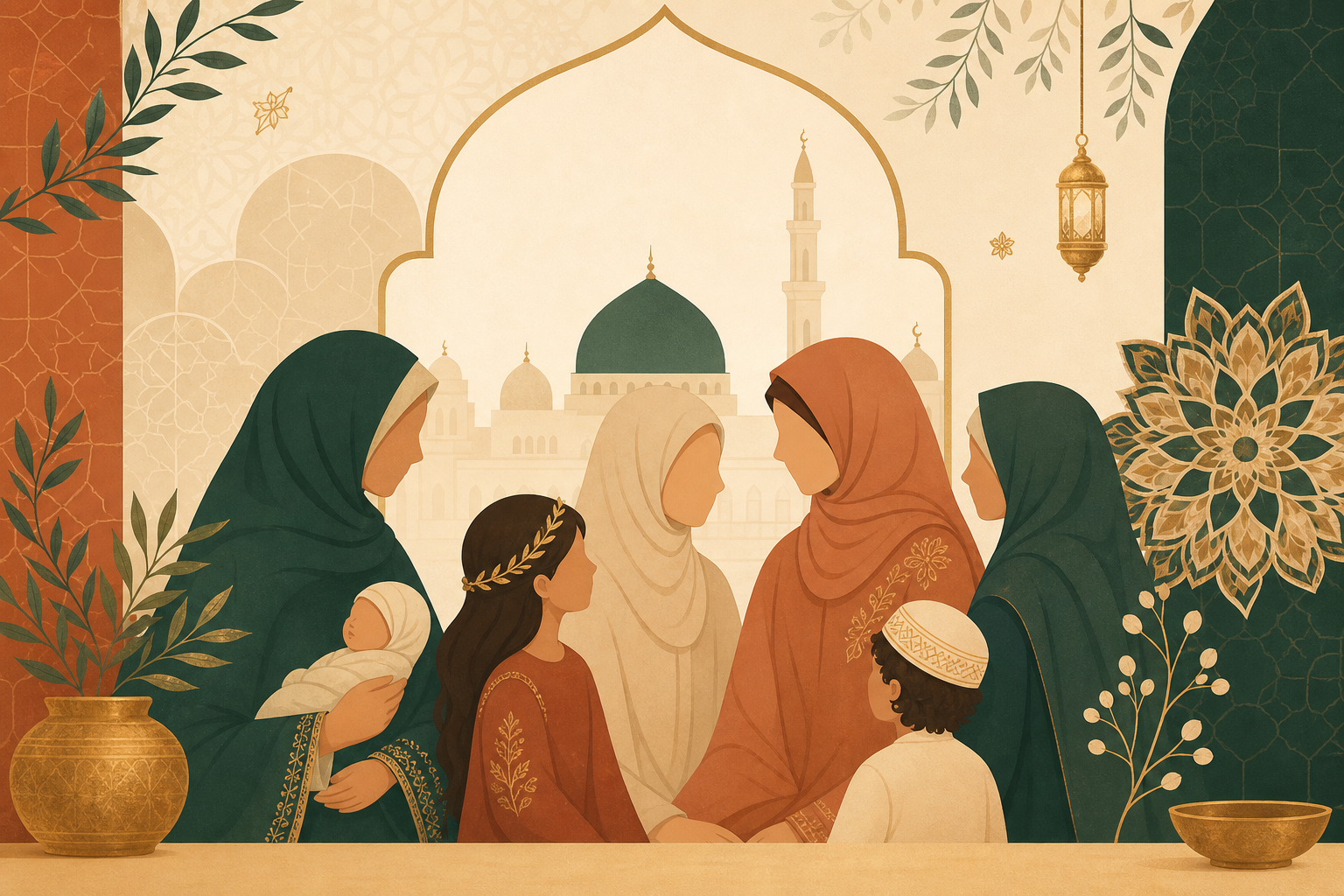
Arabic Baby Names from the Prophet's Family: Wives, Daughters & Companions
Discover beautiful Arabic names from the Prophet's household — wives like Khadija and Aisha, daughters like Fatima and Zainab, and beloved companions — with meanings and history.
Table of Contents
As Mawlid season approaches — the time when Muslims around the world celebrate the birth of the Prophet Muhammad (ﷺ) — many families turn their hearts toward names that carry a deep spiritual legacy. Names from the Prophet's household (Ahl al-Bayt) and his close companions (Sahaba) are among the most cherished in the Islamic world, chosen not only for their melodic beauty but for the extraordinary lives they represent.
Whether you are expecting a new arrival, exploring your heritage, or simply captivated by the rich tapestry of Arabic names, this guide walks you through the most beloved prophet family names — their Arabic script, pronunciation, meanings, and why they remain so powerfully popular today.
Why Choose Names from the Prophet's Family?
In Islamic tradition, a name is considered a child's first gift. The Prophet Muhammad (ﷺ) himself said: "You will be called on the Day of Resurrection by your names and the names of your fathers, so give yourselves good names." (Abu Dawud)
Names from the Prophet's family carry several layers of value:
- Spiritual blessing (barakah): Carrying the name of a righteous person is considered an honor and an inspiration.
- Historical depth: Each name is connected to a real, documented life of courage, faith, and wisdom.
- Linguistic beauty: Arabic names from this era are often rooted in powerful trilateral roots — the building blocks of the language. Learn more about how Arabic words are formed in our guide to the Arabic Root System.
- Global recognition: These names are understood and respected across the entire Muslim world, from Morocco to Malaysia.
The Wives of the Prophet: Names of Prophets' Wives
The Prophet Muhammad (ﷺ) had several wives, collectively known as the Ummahat al-Mu'minin — Mothers of the Believers. Their names have been carried by millions of women across fourteen centuries.
Khadija — خَدِيجَة
Arabic: خَدِيجَة Transliteration: Khadīja Pronunciation: Kha-DEE-ja (the kh is a soft guttural sound, like the Scottish loch)
Khadija name meaning: The name comes from the Arabic root related to premature birth, historically given to children born early. Over time, it evolved into a name of distinction. In modern usage, Khadija is associated entirely with the Prophet's beloved first wife.
Khadija bint Khuwaylid was a successful merchant, the first person to embrace Islam, and the Prophet's most beloved companion for 25 years. She supported him emotionally and financially at the very beginning of his mission. She is often called Khadija al-Kubra (Khadija the Great).
Modern popularity: Extremely popular across North Africa (Morocco, Algeria, Tunisia), the Gulf, and among Muslim communities in the West. Common variant spellings include Khadijah and Hadija.
| Feature | Detail |
|---|---|
| Arabic Script | خَدِيجَة |
| Root | خ-د-ج |
| Gender | Female |
| Meaning | One born prematurely; a distinguished woman |
| Famous Bearer | First wife of the Prophet (ﷺ) |
Aisha — عَائِشَة
Arabic: عَائِشَة Transliteration: ʿĀʾisha Pronunciation: AY-sha or Ah-EE-sha
Aisha name meaning: From the Arabic root عيش (ʿaysh), meaning to live or to be alive. Aisha therefore means "she who lives" or "full of life." It radiates vitality and energy.
Aisha bint Abi Bakr was the daughter of the Prophet's closest companion, Abu Bakr al-Siddiq. She became one of the greatest scholars of early Islam, narrating thousands of hadith and serving as a primary source of knowledge about the Prophet's private life and character. She is called Umm al-Mu'minin (Mother of the Believers).
Modern popularity: Aisha (and its variants Ayesha, Aicha, Aysha) is consistently one of the top baby girl names in Muslim communities worldwide. It is particularly common in South Asia, West Africa, and among Western Muslim families.
💡 Arabic Tip: The opening letter ع (ʿayn) is one of the unique sounds of Arabic with no English equivalent — a voiced pharyngeal fricative. Explore all Arabic letters in our Complete Guide to the Arabic Alphabet.
Other Notable Wives
| Name | Arabic | Meaning | Note |
|---|---|---|---|
| Sawda | سَوْدَة | A woman of dark complexion; date-grove | Second wife; known for generosity |
| Hafsa | حَفْصَة | Lioness cub; one who gathers | Daughter of Umar ibn al-Khattab; keeper of the Quran |
| Zaynab bint Khuzayma | زَيْنَبُ بِنْتُ خُزَيْمَة | See Zaynab below | Known as Umm al-Masakin (Mother of the Poor) |
| Umm Salama | أُمُّ سَلَمَة | Mother of Salama | Known for wisdom and knowledge |
| Juwayriyya | جُوَيْرِيَّة | Little neighbor | Her marriage led to freedom for many captives |
| Safiyya | صَفِيَّة | Pure; chosen | Of Jewish origin; embraced Islam |
| Maymuna | مَيْمُونَة | Blessed; auspicious | Last wife the Prophet married |
The Daughters of the Prophet
The Prophet Muhammad (ﷺ) had four daughters who survived childhood, all born to Khadija. Their names are among the most sacred in Islamic tradition.
Fatima — فَاطِمَة
Arabic: فَاطِمَة Transliteration: Fāṭima Pronunciation: FAH-ti-ma
Fatima name meaning: From the root فطم (faṭama), meaning "to wean" or "to separate." Historically, the name was given to children who were weaned. Spiritually, scholars interpret it as "she who abstains from evil" or "she who is protected from the Fire."
Fatima al-Zahra (Fatima the Radiant) is the most revered woman in Islamic history after her mother Khadija. She was the wife of Ali ibn Abi Talib and mother of Hasan and Husayn — the grandchildren of the Prophet. She is called Sayyidat Nisa' al-'Alamin — "Leader of the Women of All the Worlds."
Her name is perhaps the single most popular female name in the Muslim world across all cultures and time periods.
Variants: Fatimah, Fatma (Turkish/North African), Fatoumata (West African), Fatime
"Fatima is a part of me. Whoever angers her angers me." — Prophet Muhammad (ﷺ), Sahih al-Bukhari
Zaynab — زَيْنَب
Arabic: زَيْنَب Transliteration: Zaynab Pronunciation: ZAY-nab
Meaning: Often translated as "fragrant flower" or "ornament of the father." It may also be connected to the Zaynab tree (a type of acacia), symbolizing beauty and strength.
Zaynab bint Muhammad was the eldest daughter of the Prophet. She endured great hardship when her husband, Abul-As ibn al-Rabi, was a prisoner of war; she worked tirelessly for his release and his eventual conversion to Islam. Her story is one of loyalty and quiet strength.
Fun fact: The name Zaynab was shared by multiple important women in the Prophet's life, including one of his wives (Zaynab bint Jahsh) and the granddaughter of the Prophet through Fatima — the heroic Zaynab bint Ali who stood courageously in Karbala.
Ruqayya — رُقَيَّة
Arabic: رُقَيَّة Transliteration: Ruqayya Pronunciation: Roo-KAY-ya
Meaning: From the Arabic root رقى (raqā), meaning "to rise," "to ascend," or "to recite a charm/prayer." The name suggests elevation and spiritual protection.
Ruqayya bint Muhammad was the second daughter of the Prophet and married Uthman ibn Affan, who would later become the third Caliph of Islam. She migrated twice — first to Abyssinia and then to Madinah — showing extraordinary resilience in the face of persecution.
Umm Kulthum — أُمُّ كُلْثُوم
Arabic: أُمُّ كُلْثُوم Transliteration: Umm Kulthūm Pronunciation: Oom Kul-THOOM
Meaning: Umm means "mother of" — a kunya (honorific name). Kulthum relates to "chubby-cheeked" or "full-faced," a term of endearment in classical Arabic.
Umm Kulthum bint Muhammad was the youngest daughter of the Prophet. After the death of her sister Ruqayya, she also married Uthman ibn Affan — a rare circumstance that earned Uthman the title Dhul-Nurayn (Possessor of Two Lights).
| Daughter | Arabic | Core Meaning | Husband |
|---|---|---|---|
| Fatima | فَاطِمَة | She who weans / protects | Ali ibn Abi Talib |
| Zaynab | زَيْنَب | Fragrant flower | Abul-As ibn al-Rabi |
| Ruqayya | رُقَيَّة | She who ascends | Uthman ibn Affan |
| Umm Kulthum | أُمُّ كُلْثُوم | Mother of Kulthum (chubby-cheeked) | Uthman ibn Affan |
Names from the Sahaba: The Prophet's Close Companions
The Sahaba (صحابة) — the Companions of the Prophet — are revered in Islam as the finest generation of Muslims. Their names are widely used today as a direct connection to this golden era.
For Boys
Abu Bakr — أَبُو بَكْر
Meaning: Father of Bakr (Bakr = young camel; symbolizes youth and vitality). Abu Bakr al-Siddiq was the Prophet's closest friend and the first Caliph of Islam. The name Bakr alone is also given to boys.
Umar — عُمَر
Arabic: عُمَر Meaning: From ʿumr, meaning "life" or "long-lived." Umar ibn al-Khattab was the second Caliph, renowned for his justice and strength. An alternative spelling is Omar, extremely popular globally.
Uthman — عُثْمَان
Arabic: عُثْمَان Meaning: Believed to mean "baby bustard" (a bird), symbolizing nobility and freedom. Uthman ibn Affan was the third Caliph, known for his generosity and for sponsoring the standardization of the Quran.
Ali — عَلِيّ
Arabic: عَلِيّ Meaning: From ʿalā, meaning "elevated," "sublime," "noble." Ali ibn Abi Talib was the Prophet's cousin, son-in-law, and the fourth Caliph. One of the most popular boy names worldwide.
Hamza — حَمْزَة
Arabic: حَمْزَة Meaning: Related to ḥamaza — "strong," "steadfast," "lion." Hamza ibn Abd al-Muttalib was the Prophet's uncle and is called Asad Allah (Lion of Allah) for his legendary bravery. Extremely popular today.
Bilal — بِلَال
Arabic: بِلَال Meaning: From ball, meaning "moisture of water" — suggesting freshness and life. Bilal ibn Rabah was a freed Ethiopian slave who became the Prophet's first muezzin (caller to prayer), a symbol of Islam's rejection of racism.
Hassan & Hussain — حَسَن وَ حُسَيْن
Meanings: Both from the root ḥasuna — "to be beautiful/good."
- Hasan = "handsome, good"
- Husayn = "little Hasan" (diminutive, meaning "very handsome")
These are the grandsons of the Prophet through Fatima and Ali. The Prophet said: "Hasan and Husayn are the leaders of the youth of Paradise." Both names remain hugely popular.
| Name | Arabic | Meaning | Role |
|---|---|---|---|
| Abu Bakr / Bakr | أَبُو بَكْر | Father of vitality | 1st Caliph |
| Umar / Omar | عُمَر | Long life | 2nd Caliph |
| Uthman | عُثْمَان | Noble bird | 3rd Caliph |
| Ali | عَلِيّ | Elevated, noble | 4th Caliph |
| Hamza | حَمْزَة | Lion, strong | Prophet's uncle |
| Bilal | بِلَال | Fresh water | First muezzin |
| Hasan | حَسَن | Handsome, good | Prophet's grandson |
| Husayn | حُسَيْن | Very handsome | Prophet's grandson |
| Talha | طَلْحَة | Fruit-bearing tree | One of the Ten Promised Paradise |
| Zubayr | الزُّبَيْر | Strong, little brave man | Companion; son of Safiyya |
For Girls — Female Companions
Asma — أَسْمَاء
Arabic: أَسْمَاء Meaning: Plural of ism (name) — "names," "high in status," "exalted." Asma bint Abi Bakr was Aisha's sister, known for her bravery in supporting the Prophet's migration to Madinah. She is called Dhat al-Nitaqayn (She of the Two Belts).
Sumayya — سُمَيَّة
Arabic: سُمَيَّة Meaning: Diminutive of samā — "high, elevated." Sumayya bint Khayyat holds the extraordinary honor of being the first martyr in Islam, killed for refusing to renounce her faith. Her name carries immense spiritual weight.
Nusayba — نُسَيْبَة
Arabic: نُسَيْبَة Meaning: Related to nasab — "lineage, descent." Nusayba bint Ka'b (also known as Umm Umara) was a warrior companion who physically defended the Prophet at the Battle of Uhud. A name for strong, courageous girls.
The Prophet's Male Relatives: Names from the Household
Muhammad — مُحَمَّد
Arabic: مُحَمَّد Meaning: From ḥamida — "to praise." Muhammad means "the praised one" or "one who is repeatedly praised." It is the most common male name in the world. While many families feel it is too sacred to use casually, others give it as a first name with great reverence, or use it as a middle name.
Ahmad — أَحْمَد
Arabic: أَحْمَد Meaning: Comparative form of ḥamida — "most praiseworthy." Ahmad is one of the names of the Prophet himself, mentioned in the Quran (61:6). It is widely used as an alternative to Muhammad.
Ibrahim — إِبْرَاهِيم
Arabic: إِبْرَاهِيم Meaning: The Arabic form of Abraham — "father of many" or "exalted father." Ibrahim was the Prophet's son by his concubine Mariyya al-Qibtiyya. He died in infancy, and the Prophet wept at his passing in a deeply human and moving moment.
Tips for Choosing and Pronouncing These Names
Many of these names contain sounds that don't exist in English. Here are the most common challenges:
Unique Arabic Sounds
| Sound | Arabic Letter | Example | English Approximation |
|---|---|---|---|
| ع (ʿayn) | ع | Aisha عَائِشَة | No equivalent — a voiced throat constriction |
| خ (kha) | خ | Khadija خَدِيجَة | Like ch in Scottish loch |
| ح (ḥa) | ح | Husayn حُسَيْن | A breathy h from deep in the throat |
| ق (qaf) | ق | — | A k sound from the back of the throat |
| ط (ta emphatic) | ط | Talha طَلْحَة | A heavy t sound |
For a complete breakdown of all Arabic sounds and letters, visit our Arabic Alphabet guide or read How to Write Arabic: A Step-by-Step Guide.
Practical Tips
- Listen before you commit: Search for audio pronunciations on Islamic name websites or YouTube.
- Consider the nickname: Fatima becomes Fati, Khadija becomes Khadi or Dija — make sure you love the diminutive too.
- Check the meaning carefully: Some names have regional variants with slightly different meanings.
- Think about the cultural context: Names like Aisha and Omar are widely recognized in Western settings; others like Nusayba may require more explanation.
- Spelling in English: Decide on a consistent English spelling early. Aisha/Ayesha/Aicha are all valid transliterations.
Modern Popularity of Prophet Family Names
These names are not relics of the past — they are very much alive in the 21st century:
- Muhammad remains the most popular baby boy name globally when all spelling variants are counted.
- Omar regularly appears in top-100 baby name lists in France, the UK, and the United States.
- Aisha/Ayesha is a top-10 girl's name in multiple Muslim-majority countries.
- Fatima is consistently in the top-20 in Morocco, Spain, and among Muslim communities in Europe.
- Ali has crossed cultural boundaries and is popular even among non-Muslim families in some countries.
- Hamza has seen a surge in popularity in the West over the last decade.
The global spread of these names reflects the worldwide reach of Islam and the enduring love for the Prophet's family.
For more inspiration, browse our curated collections of Arabic Baby Boy Names, Arabic Baby Girl Names, and Quranic Baby Girl Names that also work beautifully in English.
Quick Reference: Complete Name Table
Girls' Names from the Prophet's Family
| Name | Arabic | Meaning | Category |
|---|---|---|---|
| Khadija | خَدِيجَة | Distinguished, premature | Wife |
| Aisha | عَائِشَة | Full of life | Wife |
| Sawda | سَوْدَة | Dark, date-grove | Wife |
| Hafsa | حَفْصَة | Lioness cub | Wife |
| Umm Salama | أُمُّ سَلَمَة | Mother of Salama | Wife |
| Fatima | فَاطِمَة | Protected, weaned | Daughter |
| Zaynab | زَيْنَب | Fragrant flower | Daughter/Wife |
| Ruqayya | رُقَيَّة | Ascending | Daughter |
| Umm Kulthum | أُمُّ كُلْثُوم | Chubby-cheeked | Daughter |
| Asma | أَسْمَاء | Exalted names | Companion |
| Sumayya | سُمَيَّة | Elevated | Companion (1st martyr) |
| Nusayba | نُسَيْبَة | Noble lineage | Companion (warrior) |
Boys' Names from the Prophet's Family & Companions
| Name | Arabic | Meaning | Category |
|---|---|---|---|
| Muhammad | مُحَمَّد | The praised one | Prophet |
| Ahmad | أَحْمَد | Most praiseworthy | Prophet (alternate name) |
| Ibrahim | إِبْرَاهِيم | Father of many | Son of Prophet |
| Ali | عَلِيّ | Elevated, noble | Son-in-law / Caliph |
| Hasan | حَسَن | Handsome, good | Grandson |
| Husayn | حُسَيْن | Very handsome | Grandson |
| Abu Bakr | أَبُو بَكْر | Father of vitality | 1st Caliph |
| Umar | عُمَر | Long life | 2nd Caliph |
| Uthman | عُثْمَان | Noble bird | 3rd Caliph |
| Hamza | حَمْزَة | Lion, strong | Uncle of Prophet |
| Bilal | بِلَال | Fresh, moist | First muezzin |
| Talha | طَلْحَة | Fruit-bearing tree | Companion |
Conclusion
The names carried by the Prophet's wives, daughters, and companions are far more than words — they are windows into lives of extraordinary faith, courage, and love. When you name a child Khadija, you invoke the memory of a woman who believed in a prophet before anyone else did. When you choose Fatima, you honor the daughter whose love for her father is one of history's most tender stories. When you name a son Ali or Omar, you connect him to leaders who shaped the world.
These prophet family names carry barakah — a blessing that transcends time. They are equally at home in a village in Senegal, a city in Indonesia, a neighborhood in London, or a suburb of Chicago. That universality is one of Arabic's most remarkable gifts to humanity.
Explore our full Arabic Names Directory to find the perfect name, and if you'd like to understand the Arabic language behind these beautiful names more deeply, start with our 100 Most Common Arabic Words or dive into Arabic Grammar Basics.
May the names you choose bring light, strength, and blessing to your children — just as their bearers brought light to the world. 🌙